
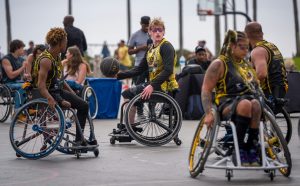
Le European Week of Sport returns from 23 to 30 September 2026, once again inviting people across the continent to #BeActive – this year under the banner “Your Way,” a reminder that every movement counts, whatever your age or fitness level. Yet behind the celebration lies an uncomfortable truth: not everyone starts from the same line.
The most recent Eurobarometer on Sport and Physical Activity found that 45% of Europeans never exercise or play sport at all. Being active is often framed as a matter of willpower, but the research tells a different story – money, time, gender, and disability shape who moves and who stays still. This article examines those barriers and the European policies trying to close the gap.
The Price of Playing: How Money Decides Who Gets in the Game
Socioeconomic status is one of the most consistently documented predictors of who takes part in sport – and the evidence points, above all, to organised sport as the domain where inequality bites hardest.
The largest and most recent synthesis on the topic, a systematic review and meta-analysis by Owen and colleagues published in the International Journal of Behavioral Nutrition and Physical Activity (2022), pooled 104 studies covering more than 1.3 million children and adolescents in high-income countries. Its central finding is striking: children and adolescents from higher-socioeconomic-status households were 1.87 times more likely to participate in sport than their lower-status peers. The same pattern held, though more weakly, for meeting overall physical activity guidelines (1.21 times more likely). Crucially, the authors found that socioeconomic differences were greater in organised sport than in total physical activity, and greater in children than in adolescents.
Why does sport specifically amplify inequality? The analysis is clear about the mechanism: sport carries additional costs – registration fees, uniforms, travel, and equipment – that create disproportionate barriers for disadvantaged families. Tellingly, the study found no significant disparity in unstructured leisure-time physical activity (like active play or walking), which costs nothing. In other words, the gap is not about the desire to move; it is about the price of access. The authors also note that the disparity is greater for the simple yes/no of participation than for how long or how often children play – suggesting that once a child from a disadvantaged background gets through the door, cost matters less. The hardest step is the first one.
The European data confirm that this pattern persists into adulthood. The Special Eurobarometer 525 on Sport and Physical Activity – based on interviews with 26,578 EU citizens across all 27 Member States in April–May 2022 – found explicitly that engagement in physical activity is markedly lower among people with less education or those facing financial difficulty. Inactivity, in other words, tracks the same social fault lines from childhood through adult life.
At the population level, the stakes are enormous. A cross-sectional analysis of the EU adult population (aged 18+, based on 2017 survey data, published in 2024) estimated that reducing economic hardship could enable roughly 137.9 million more Europeans to become physically active – attributing about 55% of the “prevented fraction” of the population to easing economic issues, a larger share than education or occupation. The message from these studies converges: economic disadvantage is not a footnote to the inactivity problem – it is close to its centre.
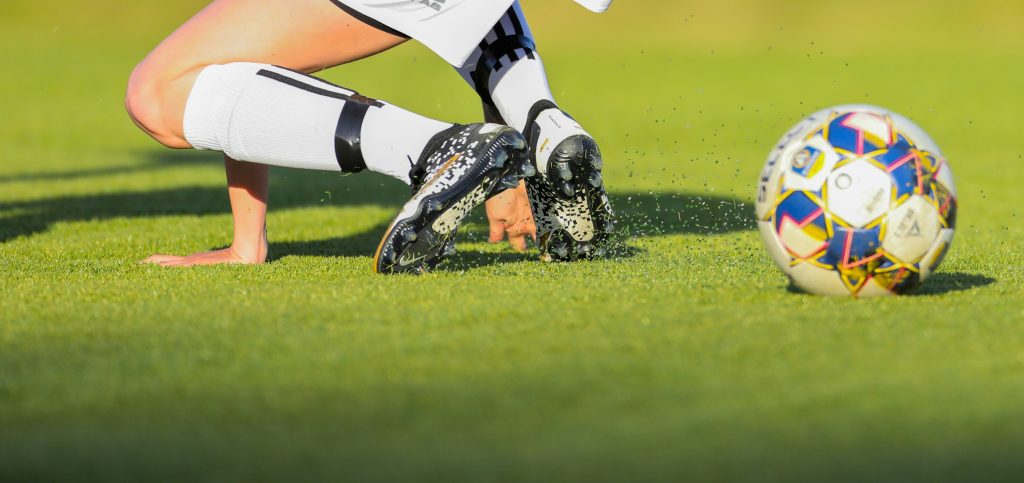
Too Busy to Be Active? For Many, It’s Not a Choice
If cost is the structural barrier, time is the one people feel most directly. According to Special Eurobarometer 525 – the largest EU survey on the subject – a lack of time is the single most common barrier to being active, reported by 41% of Europeans, followed by a lack of motivation or interest (25%). Seen from the other side, when Europeans do engage, the leading reason is to improve their health, cited by 54%.
Time, however, is not evenly distributed. It is shaped by working hours, commuting, and – disproportionately for women – unpaid care and domestic responsibilities. This is what makes the “just find an hour” framing misleading: for many people the hour genuinely is not there, and the reasons it is missing track the same social fault lines as income. The survey also captured a lasting shock to activity habits: during the COVID-19 pandemic, half of Europeans reduced their activity levels or stopped altogether – a disruption that tends to hit hardest those with the least flexibility to reorganise their days.
The Widening Gap: Why Women Still Play Less
The gender gap in physical activity is real, persistent, and – in the domain of sport – apparently widening. Special Eurobarometer 525 confirms bluntly that men are more active than women, a gap that sits alongside two other structural divides the survey documents: activity declines steadily with age, and it drops sharply with lower education and financial hardship.
A detailed study analysing Eurobarometer data across 28 European countries between 2005 and 2022, covering nearly 124,000 participants, adds important texture. It found that the gender gap in simply meeting physical activity guidelines did not change over that period – but the gap in sport and exercise specifically grew between 2009 and 2022. Interestingly, the researchers found no gender gap in walking. This points to a nuanced picture: women and men walk in comparable amounts, but structured sport and exercise remain disproportionately male. The authors’ conclusion is constructive – sport is an “underutilised” lever that, if made more accessible to women, could help close the overall activity gap.

A separate analysis of the 2013–2017 Eurobarometers reinforces the concern from a public-health angle: it found that physical inactivity consistently affects more women than men, with no progress toward the World Health Organization’s target of a 10% reduction in physical inactivity. The gender gap, in short, is not closing on its own.
Locked Out: The Fight to Make Sport Truly Accessible
For people with disabilities, the barriers are not only economic or temporal but physical and social – built into venues, services, and attitudes. The European Commission’s own framework, in Enhancing the Strategy for the Rights of Persons with Disabilities up to 2030, acknowledges that people with disabilities face strong inequalities in accessing and participating in sport and cultural events: venues and services are frequently not accessible, and participation is further hampered by persisting stereotypes and additional costs.
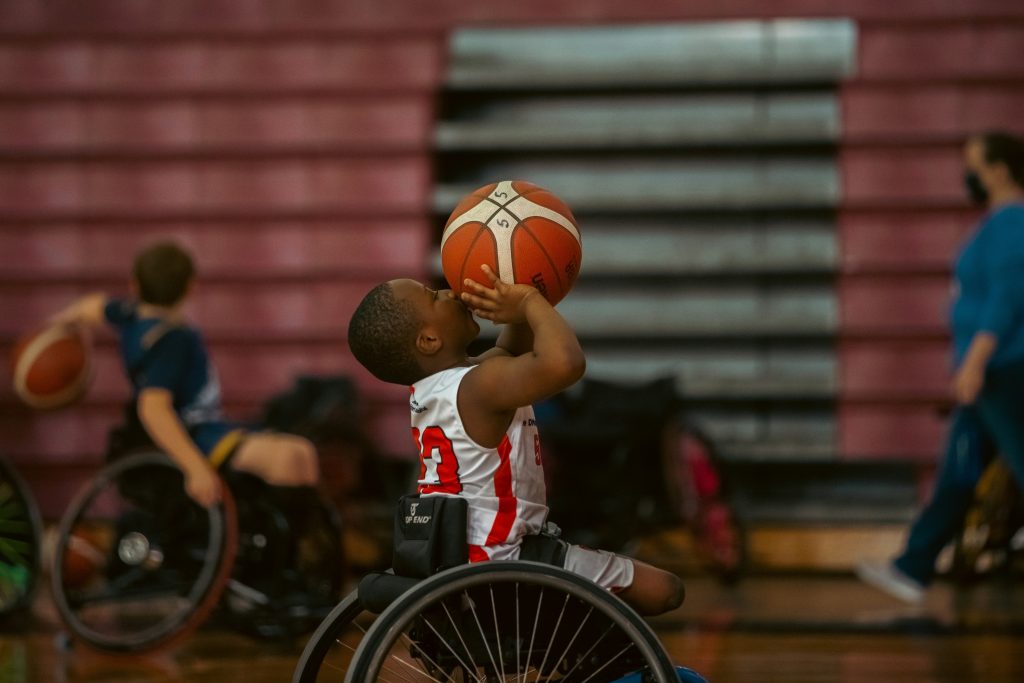
These obstacles are increasingly being treated as a policy problem rather than an individual misfortune. The “Sport For All” joint project, co-funded by the European Union and implemented from March 2025 to August 2026, directly addresses the discrimination and limited access faced by people with physical, sensory, intellectual, and psychosocial disabilities. Notably, it tackles not just physical barriers but also online discrimination – hate speech and cyberbullying – that discourages participation, and it works to strengthen anti-discrimination tools within sports organisations and to build the capacity of sport professionals to create more welcoming environments.
Closing the Gap: Europe’s Playbook for Sport for All
The barriers above are well documented – and so, increasingly, is the political will to address them. The flagship EU initiative is HealthyLifestyle4All, launched by the European Commission in 2021 as a follow-up to the Tartu Call for a Healthy Lifestyle, and explicitly linked each year to the European Week of Sport.
The initiative rests on three pillars, and the second is directly relevant here: easier access to sport, physical activity and healthy diets, with a special focus on inclusion and non-discrimination to reach disadvantaged groups. This is significant because it reframes inactivity not as a personal failing but as a question of equitable access – precisely the framing the research supports. Within the initiative’s framework, the International Paralympic Committee has delivered financial grants to National Paralympic Committees across Europe, and the campaign operates through voluntary “pledges” from organisations, authorities, and civil society.
Two threads run through the academic literature and the policy response alike. First, the researchers behind the meta-analysis on children stress that reducing these inequities requires a systems-based approach: combining “upstream” policy actions on the economic and environmental conditions for sport with “downstream” actions focused on individuals – echoing the WHO’s Global Action Plan on Physical Activity 2018–2030 and its aim to cut physical inactivity by 15% by 2030. Second, targeted financial mechanisms matter: the same review notes that cost barriers have been addressed through voucher and financial-incentive programmes around the world, with promising results – though it cautions that awareness of such schemes is itself unequally distributed, so they must be designed to reach the people who need them most.
The takeaway for the European Week of Sport is fitting. Its 2026 message – #BeActive, Your Way – celebrates movement in all its forms. But making “your way” genuinely available to everyone means confronting the barriers that decide, long before anyone laces up, who gets to take part at all.
Sources: European Commission, Special Eurobarometer 525, 2022; “Gender differences in physical activity and sport participation in adults across 28 European countries between 2005 and 2022,” ScienceDirect/PubMed 39710014; “The active living gender’s gap challenge: 2013–2017 Eurobarometers,” PMC6909566.