Menu Fermer

MinaCUP 2026

31 May – 3 June | Sailing Sardinia along the coast

This blog follows our sailing journey along Sardinia’s western coast from Cagliari to Alghero aboard Mina, offering a firsthand account of life at sea, night passages, shifting winds, and the shared experience of seamanship and learning along the way.

For a closer look at life aboard Mina and the highlights of our Sardinian adventure, explore our video journal and relive the journey with us on YOUTUBE.

We left on Sunday, 31 May, at around 17:00, setting sail from Cagliari on a journey that would take us all the way to Alghero. As we made our way along Sardinia’s western coast, the island revealed itself from a different perspective — one only visible from the sea. With the wind constantly shifting and the coastline changing hour by hour, the voyage became as much about experiencing the island as it was about reaching our destination.

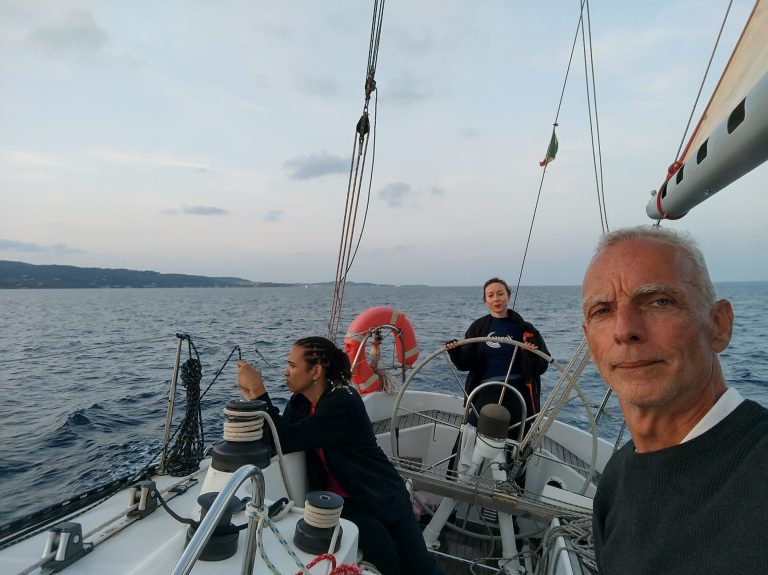
There were three of us aboard Mina, which for us is more than just a boat; it is a shared space for learning, exchange, and daily seamanship practice in an intercultural and intergenerational setting. 

Although Sardinia is renowned for hosting world-class sailing and motorsport events, our journey was focused on exploration and immersion rather than competition. That said, we had the privilege of cruising during a particularly vibrant period in the island’s sporting calendar. We brought Mina down to Cagliari to witness the excitement of the Louis Vuitton 38th America’s Cup Preliminary Regatta, and as we departed, the city was also hosting the Formula 1 H2O World Championship. Together with prestigious events such as the Range Rover Sardinia Cup in Porto Cervo, these competitions infused the waters around us with a unique sense of energy and celebration throughout the peak of Sardinia’s 2026 nautical season.
Race Day 3, LUNA ROSSA TEAM 2, winners
24 May 2026. Louis Vuitton 38th America’s Cup – Preliminary Regatta Sardinia Race Day 3, LUNA ROSSA TEAM 2, winners .

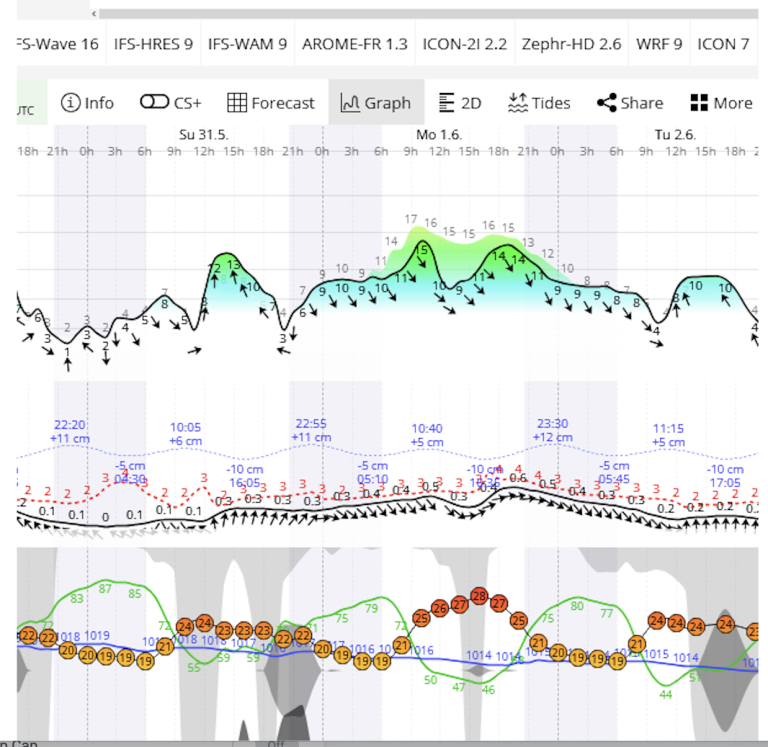
We set off in the late afternoon from Marina del Sole, Cagliari, to avoid harbour traffic and make the most of the clearer conditions at sea. From there, we headed south along the coast toward Capo Pula. The wind was light but steady, allowing us to settle into an easy rhythm of sailing, with the coastline always within sight — a constant reference point shaping our course
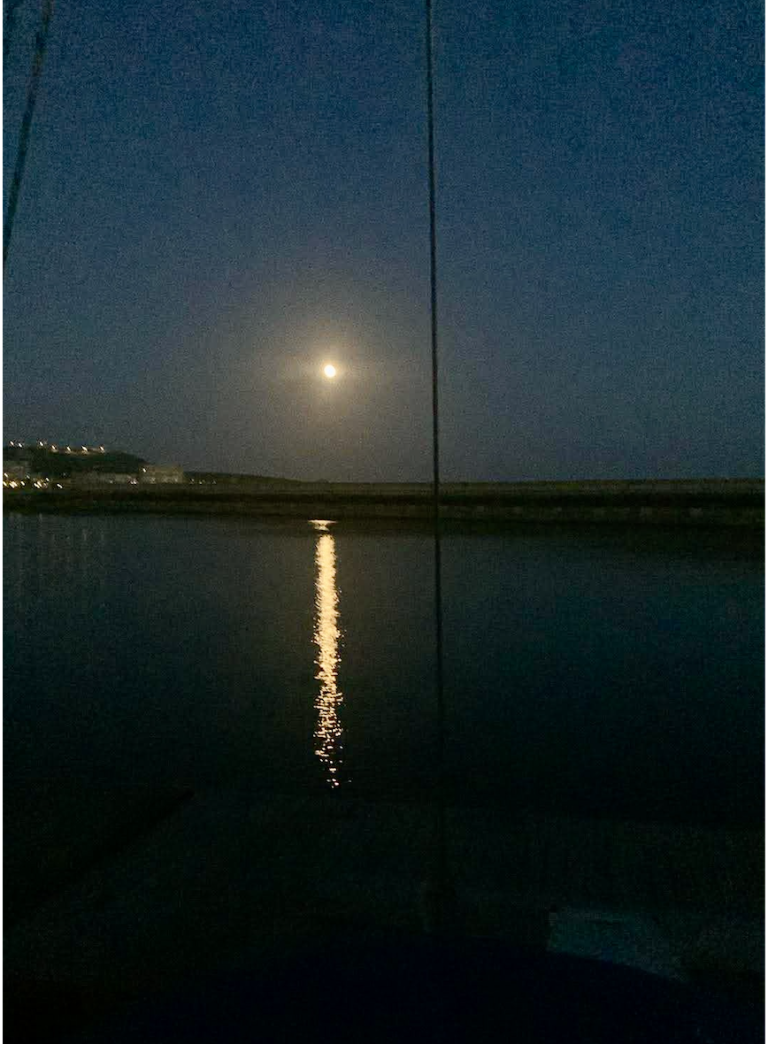
As night fell, the atmosphere shifted into something quieter and more focused. The navigation became calm and attentive, guided by the steady glow of a lighthouse and an extraordinary full moon that flooded the sea with light, turning the water into a silver path stretching ahead of us. Under its illumination, the coastline stood out in soft relief as we continued south.

We sailed through the night on a steady beat upwind, tacking along the coast in a beautiful rhythm that carried us past Capo Spartivento and toward Capo Teulada. The combination of wind, moonlight, and silence gave the passage a rare sense of clarity and presence at sea.

By morning, the sea had softened into a calmer rhythm. We sailed between Isola del Toro, Isola della Vacca, and Isola del Vitello — a playful sequence of names that made us smile onboard after a night at sea. From there, we continued toward Capo Sperone, with the wind gradually easing as we drew closer to Sant’Antioco.

We arrived in Carloforte around 13:00 for a stop to refuel and take a short break. The harbour immediately revealed its character: a lively waterfront where fishing boats, small events, and everyday port life mixed with a steady flow of people along the quays. The atmosphere felt active and welcoming, with the town unfolding around the sea.

Carloforte, on the island of San Pietro, has a unique identity in Sardinia. It is a Tabarchino community, founded by Ligurian families who had previously settled in Tunisia before returning to Italy in the 18th century. This heritage is still present today in its culture, language, and close relationship with the sea. The town is also deeply connected to the tradition of tuna fishing, which has shaped both its history and its economy.

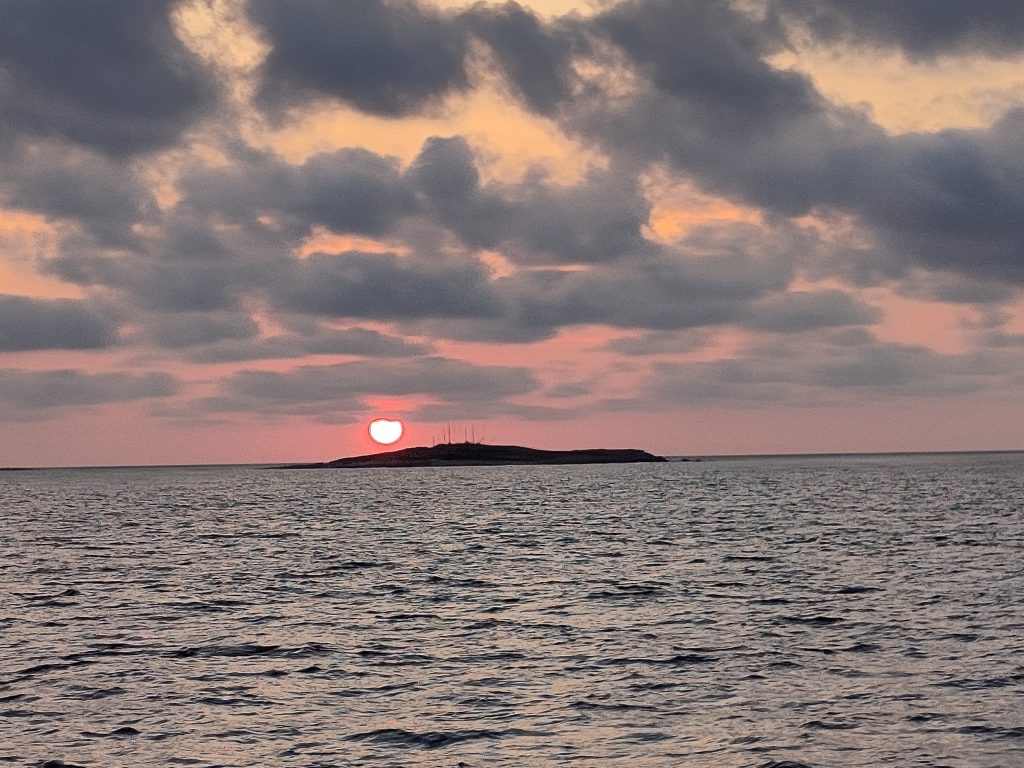
At 18:00 we set sail again, now heading north toward Alghero, aiming to catch the sunset along the return route. The wind was lighter and less consistent, so the passage became a mix of sailing and engine. It was not the most enjoyable part in terms of pure sailing performance, but it gave us time to slow down, take shifts calmly, and observe the sea in a different way — less driven by speed, more by endurance and attention.

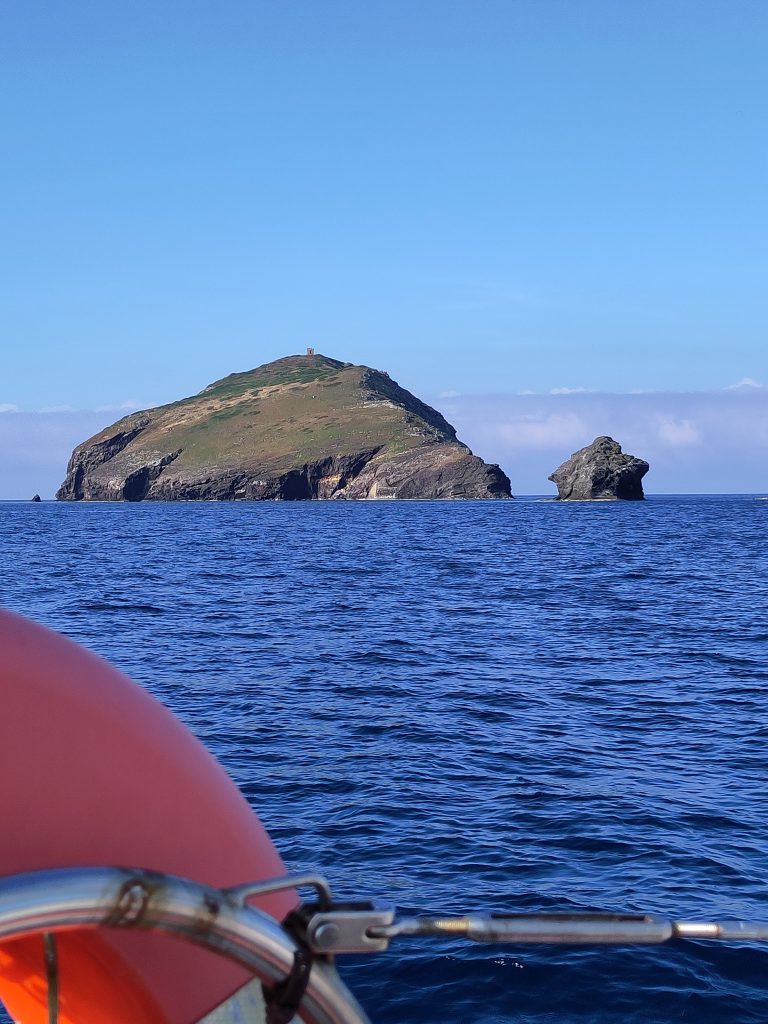
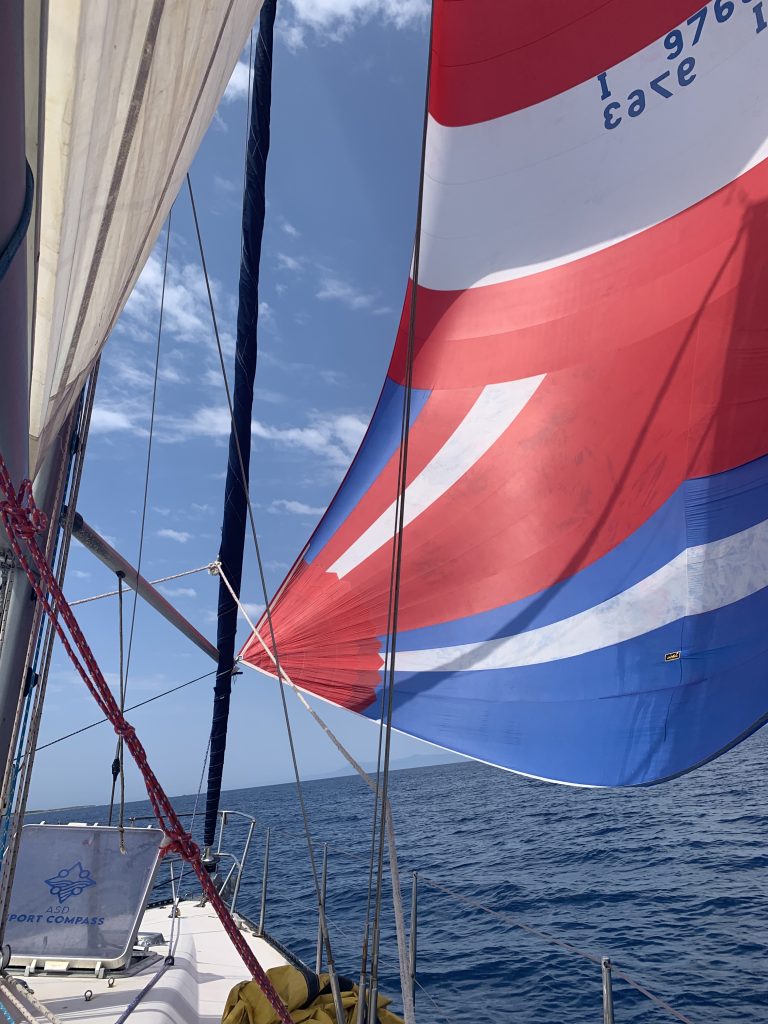
We were still lucky for a while: a gentle southwest breeze filled in just enough for us to set the colourful spinnaker, and for a short but beautiful stretch we sailed smoothly past Isola di Mal di Ventre — a small, uninhabited and exposed island, known among sailors as a remote landmark along the Sardinian west coast.

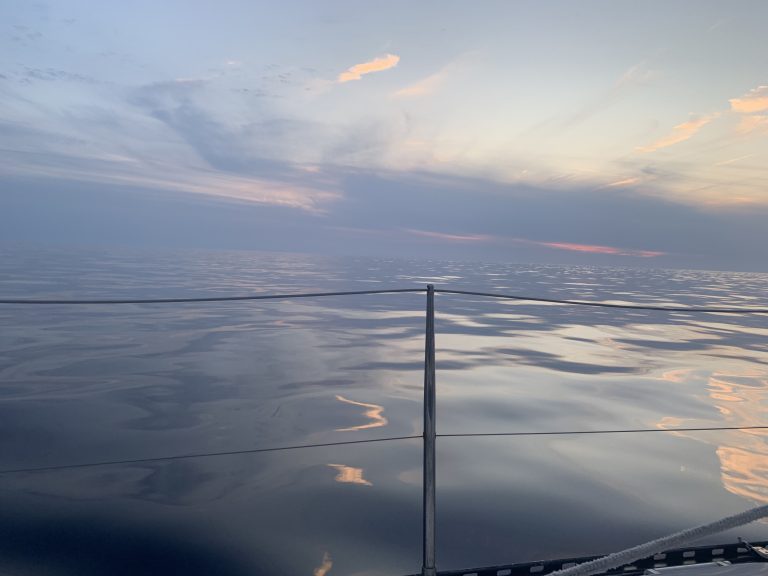
Even then, the sea remained calm and reflective, and the night navigation felt steady and controlled rather than rushed.

Finally, after hours of mixed conditions and quiet watch rotations, we arrived back in Alghero at around 02:00. The coastline gradually came to life in the dark, with the lights of the city appearing first as a soft glow, then slowly revealing the shape of the harbour. The illuminated towers of Alghero stood out against the night, while a clear sky full of stars stretched above us. With the compass steady on course and the moon behind us, the final approach felt calm and almost suspended in silence, as we slipped back into port.

It was a passage defined not by distance alone, but by contrast: wind and calm, laughter and focus, full sail and engine hours, coastline always present. A shared experience shaped by sea conditions, simple moments, and the constant presence of Sardinia’s ever-changing coast. Mina made it an amazing experience, a true sailing ship that embodied resilience and the spirit of ASD Sport Compass, with a strong focus on teamwork, learning, and seamanship throughout the journey.