
Physical Activity in Europe: How Gender, Geography and Age Shape Who Plays Sport
By Tao Robert
As the European Week of Sport 2026 takes place from 23 to 30 September, it offers a fitting moment to ask: how physically active are Europeans?
To answer this question, we start from the observation made by the last Eurobarometer on sport and physical activity conducted in 2022 in the 27 member countries. What this report shows us is that 55% of Europeans practice at least once a week on a regular basis and 49% claim to engage in regular physical activity, whether in a club or spontaneously. On the other hand, a large share of the European population, up to 45%, says they never exercise or play sports.
In addition to the statistical aspect, what we see today is that a still significant part of the European population is inactive or too little active. With regard to insufficient physical activity, based on additional data from the WHO and the OECD, this rate ranges from 19% in Finland to 46% in Portugal. Insufficient physical activity is particularly widespread in some southern European countries and less common in the Nordic countries, which can be the cause of both physical and mental health problems. Of course, the share of people active within the union is subject to certain variables and there are many disparities, particularly with regard to age, gender and socioeconomic situation.
Unfortunately, we still see the persistence of a gender gap in sports. Specifically, men are more likely than women to participate in sports or exercise regularly. According to Eurobarometer data, 40% of them say they “never” do it, compared to 49% of women, and if we look at the statistics for each country individually, we see that this gap is homogeneous.
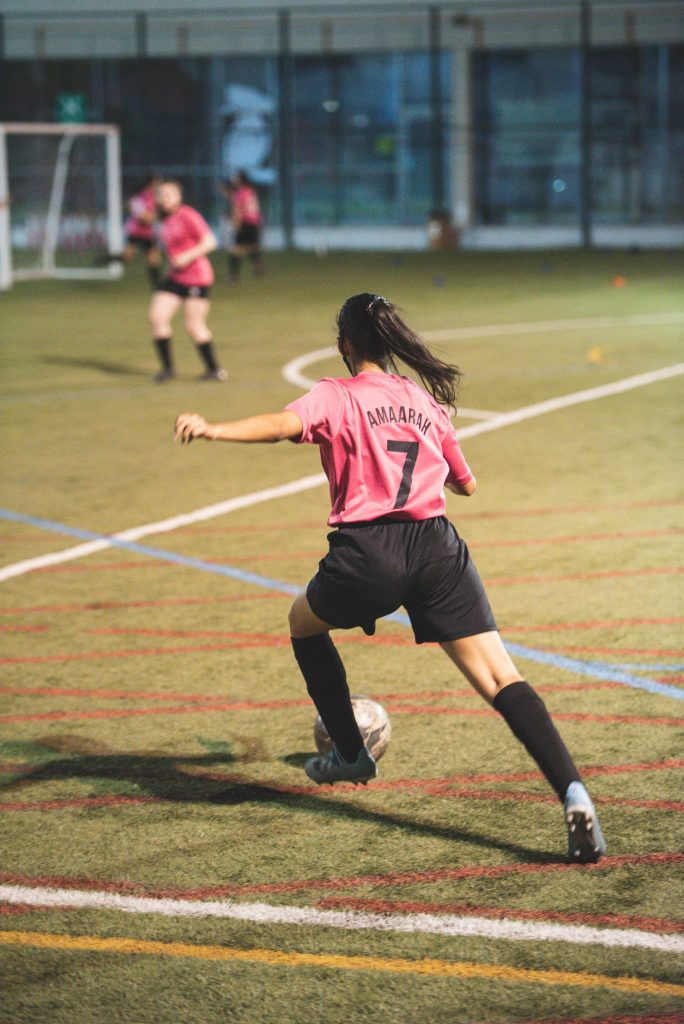
This difference is explained by many causes that have been studied at length in the context of gender studies. Among them, there is the mental load that women suffer in their daily lives, preventing them from finding free time. We can also mention the additional workload that comes with managing the family home, of which they are, all too often, the only managers. Also, we find that, earlier than men, women are inactive and this is due to the lack of incentive for sports by families. It is more spontaneously considered that sport is not necessary for young girls, especially when they enter puberty, which becomes a hindrance by leading to complications, notably the management of rules and their consequences in sport. Thus, young girls often grow up at the expense of their participation in sports from which they are very young.
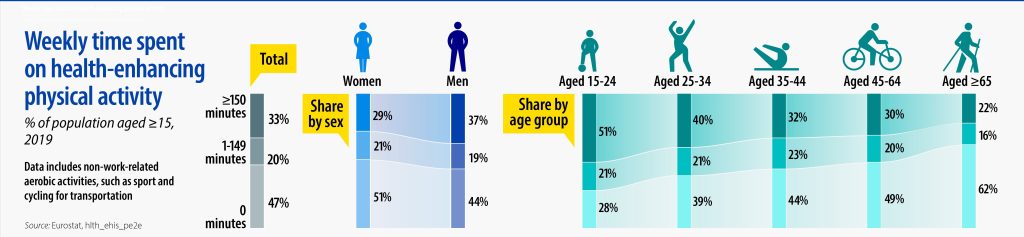
However, the geographical factor is also important in whether or not one practices sport. There are strong disparities between northern Europe (Finland, Sweden and Denmark) and southern and eastern Europe (Italy, Poland, Portugal). According to the latest Eurobarometer on sport, some countries such as Greece and Poland achieve record rates of total absence of physical activity with respectively 68% and 65% of respondents saying they never do any sport. This report also highlights that only 2% of Poles and Romanians, and 3% of Italians, do sports regularly, which is more than 5 times a week.
These disparities between the north and south/east have much to do with each country’s economic development and standard of living. Indeed, a lower endowment of sports facilities and more difficult and less remunerative working conditions as well as a higher number of working hours reduce the chances of practicing a sporting activity. Indeed, according to respondents in each of the 27 countries, the main reason for a lack of regular physical activity is the lack of time followed closely by the lack of motivation. We then see the link between more difficult living conditions and a lower level of participation in sports.
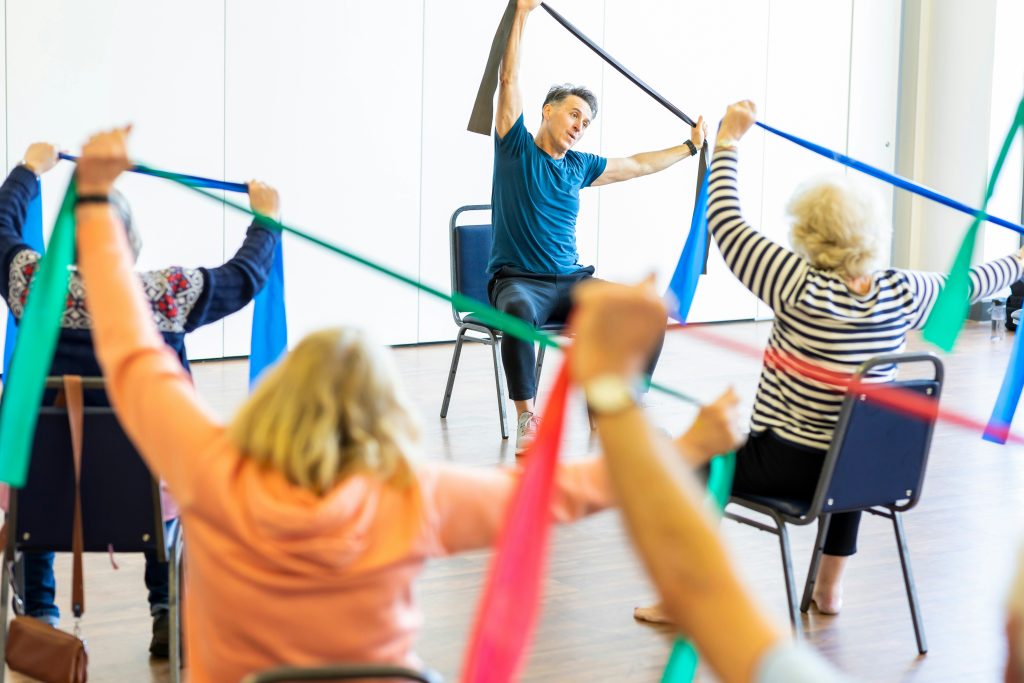
When it comes to the elderly population, geography is also of interest. Indeed, a study conducted by Eurostat compares the health and physical activity of elderly people using the urban/rural variable. In most countries, the health and physical activity of elderly people is significantly better when they live in cities, which can largely be explained by the presence of more appropriate infrastructure such as swimming pools, bike paths, sports club but also urban planning that makes the city more “walkable” and thus facilitating physical activity in a safe and reassuring environment.
Of course, these data are not infallible and sometimes irrelevant in some countries like Spain where the Covid lockdown had not yet been fully lifted. Covid and its consequences have had a strong impact on physical activity among Europeans, but it also shows that the promotion and introduction to sports is even more necessary in order to overcome these consequences and to reduce the inactive part in some European countries.